
 The lecture encyclopedia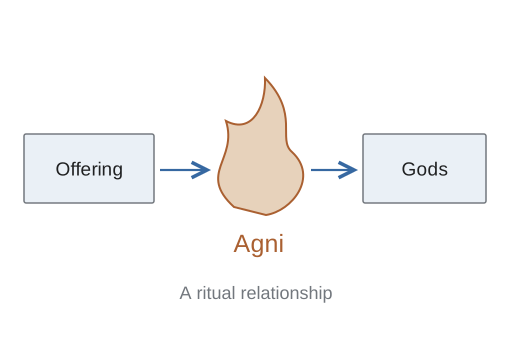
Collections and literary layers #
The four Vedic collections are the Rig, Yajur, Sama, and Atharva Vedas. A different distinction separates types or layers of Vedic literature: Samhitas contain hymns; Brahmanas explain rituals through commentary, narrative, and interpretation; Aranyakas develop forms of forest-associated reflection; and Upanishads explore questions about self and reality.
These two classifications should not be confused. Four collections are not four individual poems, and four literary layers are not four interchangeable names for the collections. Oral transmission and gradual development also make a single date for the entire corpus misleading.
The participants in sacrifice #
Fire sacrifice joins a sponsor, trained priests, material offerings, an altar, and correctly recited words. Offerings can include grain and dairy products such as clarified butter. Historical practices varied, including forms of animal sacrifice. No one ingredient list describes every ritual across all periods.
Soma is both a ritual substance and a divinity in Vedic materials. Its ancient botanical identification remains uncertain. It should be distinguished from cattle, which figure prominently as wealth and as part of the material economy supporting ritual life.
The desired results can include prosperity, health, descendants, protection, and heaven. These benefits involve families and communities. In the gendered system described by the texts, sons preserve ritual knowledge and sustain rites for ancestors, making the transmission of responsibilities central to continuity.
Agni as priest and messenger #
The opening hymn of the Rig Veda praises Agni in roles that resemble those of a priest: a mediator, guardian, and participant in ordered worship. A human priest addresses Agni, while Agni carries offerings toward divine recipients. The two levels of mediation connect human speech and material fire.[1]
The hymn also associates Agni with ṛta, an ordering principle. Praising fire is therefore connected with preserving a world in which relationships and actions have dependable consequences.
Two interpretations can coexist. Priests may sincerely investigate obligations they regard as essential, while their explanation also supports their social authority. Recognizing the second function need not erase the first.
Creation and linguistic explanation #
A Brahmana narrative describes Prajapati, a creator associated with creatures and progeny, bringing Agni from his mouth. Fire immediately raises a problem: something that consumes must be fed. Creation produces responsibility for sustaining what has been created.
The explanation uses associations among names, sounds, actions, and ritual sequence. Such wordplay is part of the text's method of understanding reality. It is not equivalent to a modern historical dictionary etymology.
For example, connecting Agni with going first reinforces fire's necessary position at the beginning of sacrifice. Narrative and ritual procedure explain one another. Humor or imaginative language does not make the account trivial: familiar experiences of hunger, heat, danger, and dependence support serious claims about human and cosmic order.