
 The lecture encyclopedia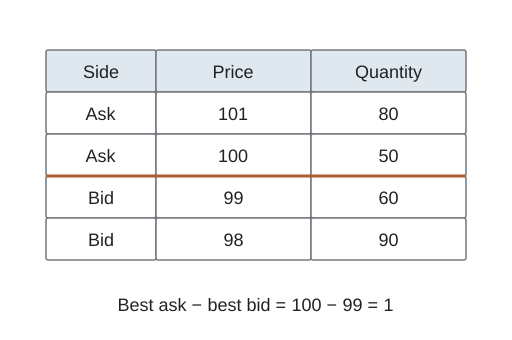
Portfolio design links an economic view to a set of exposures, a time horizon, and a plan for adverse outcomes. Trading mechanics matter because an attractive valuation does not guarantee that a position can be entered or exited at the desired price. During stress, financing conditions can dominate ordinary investment expectations.
Liquidity and execution #
Liquidity is the ability to transact without excessive delay or price impact. A frequently traded asset can generally absorb an order more easily than an inactive one, but liquidity changes with conditions. A last-trade price records a past transaction; it is not a promise that a new order can execute there.
A large investor faces both market impact and information leakage. Dividing an order over time may reduce immediate pressure on price. Concealing the full order may prevent others from inferring the strategy before execution is complete.
Block trades match large buyers and sellers. Dark trading venues conceal orders before execution, which can reduce information exposure. These mechanisms do not make liquidity unlimited or remove the need to understand transaction costs.
Short positions and options #
A short seller borrows shares, sells them, and later purchases shares to return. Falling prices can produce a gain before costs; rising prices increase the cost of closing. Borrowing fees and financing conditions also matter.[1]
A short squeeze can create feedback: rising prices induce short sellers to buy back shares, adding demand that pushes prices higher. This mechanism is distinct from an improvement in the underlying business.
Writing a put creates an obligation to purchase if assigned. If the strike is 65 and the asset is worth 63, assignment means paying 65 for an asset worth 63. The premium offsets part of that result but does not make the risk disappear. Writing a call creates a different obligation, to sell.[2]
A coherent portfolio thesis #
A portfolio thesis states an expected economic development and explains how selected assets respond. It also identifies events that would make the view wrong. A collection of individually interesting funds is not necessarily a coherent portfolio.
Weights determine the size of each exposure. Time horizon and liquidity needs determine whether an investor can tolerate temporary losses or wait for a thesis to develop. A long horizon does not eliminate the need for cash along the way.
Hedges should correspond to identifiable risks. Their costs can lower returns when the feared event does not occur, just as insurance can be useful without producing a payout.
Forced selling and feedback #
During a rush for cash, investors may sell many different assets simultaneously. Diversification can then provide less short-term protection than expected because the common driver is a funding need.
Margin creates another loop. Falling collateral values trigger demands for additional funds; asset sales to meet those demands depress prices further; lower prices can produce more demands. Available borrowing capacity is not the same as cash safely held in reserve.
Liquidity and solvency must be distinguished. An investor may own valuable assets but lack cash needed today. Alternatively, the assets may be insufficient to cover liabilities even if time is available.
Scenario analysis #
Useful scenarios translate events into mechanisms: interest-rate changes affect financing, supply disruptions affect costs, and shifts in demand affect revenue. The aim is to understand how a portfolio behaves under different conditions, including the possibility that its own funding requirements force action at an unfavorable time.